Critical Thinking eBook: Smarter Decisions & Brain Teasers
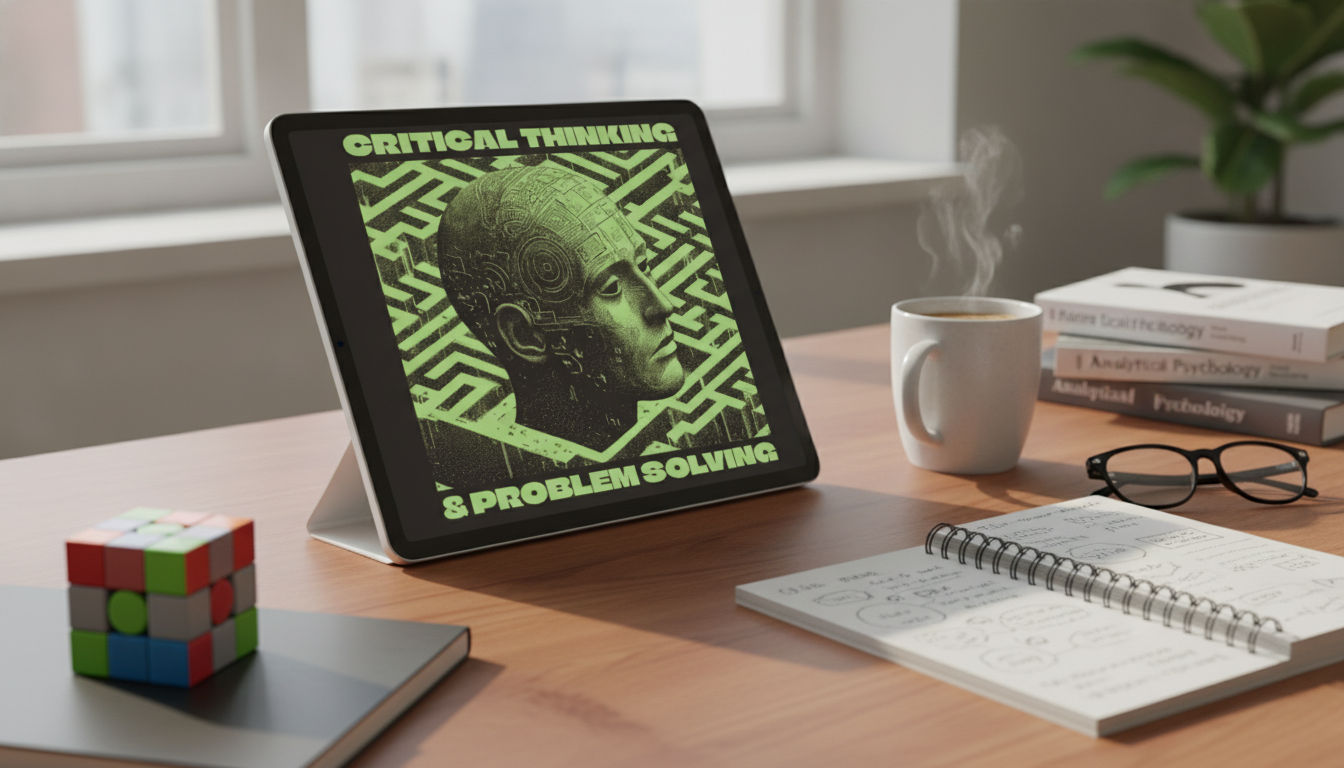
Critical Thinking & Problem Solving eBook: A Digital Guide to Smarter Decisions, Brain Teasers, and Everyday Life Skills
Better decisions rarely come from having more information—they come from having a clearer process. The Critical Thinking & Problem Solving eBook (Digital Download) is built to strengthen practical reasoning through structured problem-solving tools, short mental models, and brain teasers that sharpen clarity for work, school, and day-to-day choices.
Whether the challenge is picking the right option under time pressure, spotting weak assumptions, or staying calm enough to think straight, this guide focuses on repeatable habits—so decisions feel less like guesswork and more like a skill you can practice.
What This eBook Helps Improve
- Turning vague problems into clear, solvable questions
- Spotting assumptions, gaps in evidence, and misleading conclusions
- Choosing between options with a repeatable decision process
- Handling everyday trade-offs (time, money, relationships) with less second-guessing
- Building mental flexibility using brain teasers and logic challenges
Many everyday mistakes trace back to predictable thinking shortcuts. Research on heuristics and biases shows how easily judgment can drift when the brain leans on quick rules of thumb instead of careful checks (Tversky & Kahneman, 1974). A simple framework helps you slow down at the right moments—without overthinking everything.
What’s Inside the Digital Download
- Step-by-step frameworks for defining problems, generating options, and evaluating outcomes
- Decision-making checklists for fast choices and high-stakes choices
- Brain teasers and puzzles designed to strengthen logic, pattern recognition, and clarity under pressure
- Practical exercises that translate reasoning skills into daily life habits
- Review prompts to track progress and apply lessons to real scenarios
Skill Areas and How to Practice Them
| Skill area | What it strengthens | Quick practice idea | When it helps most |
|---|---|---|---|
| Problem framing | Turning confusion into a clear target | Rewrite the problem as a question with a measurable outcome | When the situation feels messy or emotional |
| Option generation | Avoiding false either/or choices | List 10 options, including “bad” ones to unlock creativity | When stuck between two choices |
| Evidence checking | Separating facts from guesses | Label each claim: observed, inferred, assumed | When opinions feel louder than data |
| Trade-off thinking | Choosing with fewer regrets | Rank what matters (time, cost, risk, values) before comparing options | When every option has a downside |
| Logic & puzzles | Clear reasoning under constraints | Solve 1–2 teasers, then explain the solution in plain language | When thinking feels sluggish or scattered |
A Simple Problem-Solving Loop to Use Daily
“Decision making” is often described as selecting among alternatives, but strong decisions are usually the result of a solid sequence—clarify, compare, act, review (see the APA definition of decision making for a helpful baseline). A practical loop keeps you moving while still protecting you from avoidable errors:
- Define the problem: describe what is happening and what “better” looks like.
- List constraints: time, budget, rules, people affected, non-negotiables.
- Generate options: include unconventional and low-effort alternatives.
- Test assumptions: identify what must be true for each option to work.
- Decide and act: pick the best fit, set a small next step, and commit.
- Review results: note what worked, what didn’t, and what to change next time.
This cycle is especially useful for repeatable “life admin” decisions—choosing a weekly schedule, handling a recurring conflict, or making a purchase without spiraling into endless comparisons.
How Brain Teasers Translate Into Real-Life Decisions
- They train patience: slowing down before jumping to the first answer.
- They build error detection: noticing contradictions and missing steps.
- They improve working memory: holding several constraints at once.
- They strengthen explanation skills: articulating reasoning clearly to others.
- They reduce mental shortcuts: recognizing when intuition needs a double-check.
A brain teaser may look like a game, but the payoff is practical: you learn to separate what feels true from what must be true. That same shift helps when you’re interpreting an email at work, estimating the real cost of a subscription, or deciding whether a disagreement is about facts, values, or misunderstandings.
Who This eBook Fits Best
- Students who want stronger reasoning for tests, essays, and projects
- Professionals who make frequent decisions, prioritize tasks, or manage risk
- Parents and caregivers navigating trade-offs, routines, and conflict resolution
- People who enjoy puzzles and want them to have real-world payoff
- Anyone rebuilding confidence after decision fatigue or information overload
For a broader foundation in core concepts and tools, the Foundation for Critical Thinking is a helpful reference point (The Miniature Guide to Critical Thinking Concepts & Tools). This eBook puts that spirit into a more “do it today” structure—frameworks, short drills, and quick reviews you can reuse.
Getting Started After Download
Related Digital Resources That Pair Well
- Calm Your Mind: Guided Meditation Series — calming the mind can improve clarity and reduce impulsive decisions during stress.
- Talk & Connect: Parent-Child Communication Workbook — communication prompts help explain reasoning and negotiate better outcomes at home.
- The Income Multiplier Bundle — decision frameworks become more powerful when applied to income planning and longer-term goals.
FAQ
Is this eBook suitable for beginners who feel “not naturally logical”?
Yes. The frameworks are designed to be learned in small steps, and the brain teasers progress from approachable to more challenging so you can build confidence through practice.
How long does it take to notice better decision making?
Many people notice improvements within days to a few weeks, depending on consistency. A 10–15 minute routine plus a simple decision log tends to make progress easier to see.
Can the exercises be used for work and everyday life?
Yes. The tools apply to prioritizing tasks, budgeting, planning conversations, troubleshooting problems, and comparing options when every choice has trade-offs.











Leave a comment