Teach Your Child Emotional Intelligence: Daily EQ Skills
How to Teach Emotional Intelligence to a Child
Emotional intelligence (EQ) is the skill set that helps kids recognize feelings, name them, manage them, and respond to other people with care. The goal isn’t to prevent big emotions—it’s to teach children what to do when those emotions show up. With a few consistent habits at home, EQ becomes part of everyday life, not a special lesson.
For a deeper, step-by-step guide with practical examples, visit How to Teach Emotional Intelligence to a Child.
What does emotional intelligence look like in kids?
In real life, EQ looks like a child saying, “I’m frustrated,” instead of yelling, asking for space when overwhelmed, or noticing a sibling is sad and offering comfort. It also includes repair skills—apologizing, trying again, and learning from conflict without shame.
How can parents teach EQ day to day?
Start by naming feelings often and calmly: “You look disappointed,” or “That scared you.” This builds a vocabulary that makes emotions less confusing and less explosive. When your child shares a feeling, reflect it back before solving: “You wanted a turn, and it felt unfair.” Feeling understood helps the brain shift from reactive to thoughtful.
Next, connect feelings to needs and choices. Try simple scripts: “It’s okay to be angry. It’s not okay to hit. Let’s stomp our feet or squeeze a pillow.” Over time, kids learn that all emotions are allowed, but not all behaviors are.
How do you teach emotional regulation during meltdowns?
During a meltdown, keep language short and your tone steady. Offer co-regulation: sit nearby, breathe slowly, and provide a predictable option like water, a hug, or a quiet corner. After the storm passes, do the learning: label what happened, practice a coping tool, and plan for next time (“When you feel your face get hot, you can ask for a break”).
How can you model emotional intelligence at home?
Kids learn EQ fastest by watching adults. Say out loud what you’re doing: “I’m stressed, so I’m taking three breaths.” When you make a mistake, repair it: “I raised my voice. I’m sorry. Next time I’ll pause.” That teaches accountability and shows emotions can be handled safely.
FAQ
What are some simple emotional intelligence activities for kids?
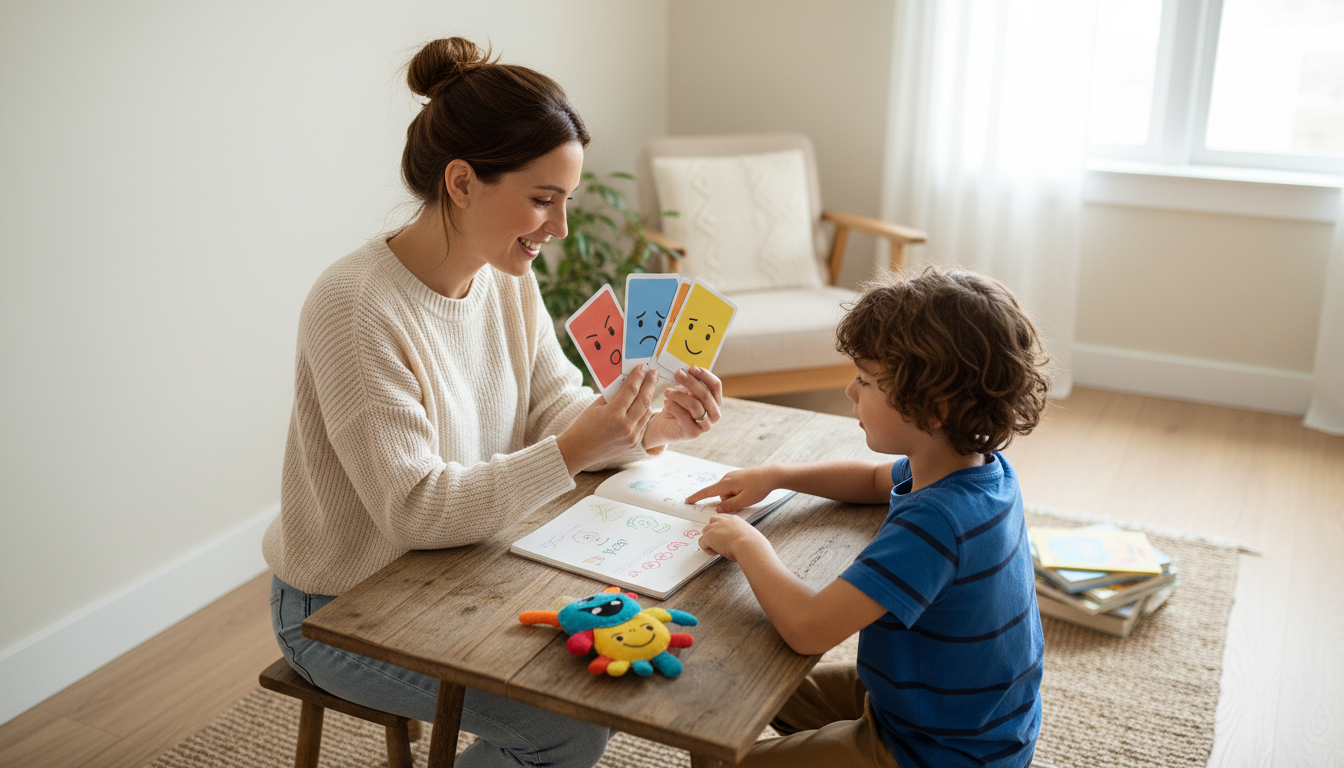
Use emotion cards or draw faces that match feelings, then ask when your child felt that way. Role-play common moments (losing a game, sharing toys) and practice phrases like “Can I have a turn next?” to build real-world skills.











Leave a comment